3PL warehouses across Australia
Find the best 3PL warehouses in Australia.
From Melbourne and Sydney to Brisbane, Adelaide and Perth, our vetted 3PL network covers every mainland state capital. Tell us what you need and we’ll shortlist reliable warehouses, gather quotes and help you compare them line by line. Free, with no obligation.
- 300+ businesses helped
- Every Australian 3PL partner visited in person
- Customised proposals typically within 2–3 days

You’ll deal with me directly, not a call centre. I review every request personally and reply within one business day.
Get matched free (by a human)
Prefer to talk first? Book a free review call
Trusted by 300+ businesses, from startups to global brands


Our Australian network
3PL warehouse locations across Australia
We have pre-screened 3PL partners in every mainland state capital. Choose a city to explore local insights, or tell us where your customers are and we’ll recommend the right location.
Where should your stock be?
1Melbourne, Sydney and Brisbane. Closest to about three in four Australians and the busiest container ports. Where most brands start.
A southern base that is often cheaper for storage. Best for brands with customers in South Australia.
About 3,300 km from Sydney. A local warehouse cuts delivery times and freight costs for Western Australian customers.
Not sure? Tell us where your customers are and we’ll recommend a location, or an east coast and Perth split.
1East coast 3PL warehouses
About 77% of Australians live in New South Wales, Victoria and Queensland, so most brands start with an east coast warehouse. Melbourne and Sydney handle most of the country’s container imports and are linked by overnight road freight.
2South Australia 3PL warehouses
Adelaide sits between Melbourne and Perth on the main road and rail routes, and warehouse costs are often lower than on the east coast.
3Western Australia 3PL warehouses
Western Australia is home to about one in nine Australians, but parcels from the east coast take longer and cost more to get there. A Perth warehouse, served by Fremantle port, removes the cross-country leg for WA orders.
3 easy steps to a reliable 3PL warehouse
1
Tell us what you need
A quick form, then a free 45-minute review call with Andrew, our founder. He learns your products, volumes, locations and systems, so we brief only the right warehouses.
2
Compare quotes with an expert
We relay proposals unchanged and go through them with you line by line, so nothing hides in the fine print. Warehouse tours arranged if you want them.
3
Choose with confidence
You sign only with the 3PL you choose. We stay on hand through onboarding and beyond, a call or email away.
Recent Australian placements
Helping brands find the right Australian 3PL
Madd Gear: a new Australian 3PL after a change of ownership
When Madd Gear’s New Zealand team took over its Australian operations, we modelled the options and recommended a 3PL to support its growth. “His communication, modelling and information went above and beyond our expectations.” Glen and Kim, Madd Gear
Read the Madd Gear case study →Cellnet: consolidating several 3PL warehouses
Cellnet, a distributor of lifestyle technology and gaming accessories, worked with us to consolidate its multiple 3PL warehouses into a single owned warehouse, on a short timeline.
Read the Cellnet case study →Why businesses choose Warenous
Our founder ran sales at a national 3PL. Now we use that inside knowledge for you.
Warenous helps businesses of all sizes — from startups to global brands — find reliable 3PL warehouse partners at no cost. Our pre-screened network spans the United States, Australia, Europe and Asia, so you get the right warehouse in the right location. Whether you’re expanding into a new market or improving your existing supply chain, our free matching service saves you time, reduces risk and helps your business scale faster.
We’ve visited them
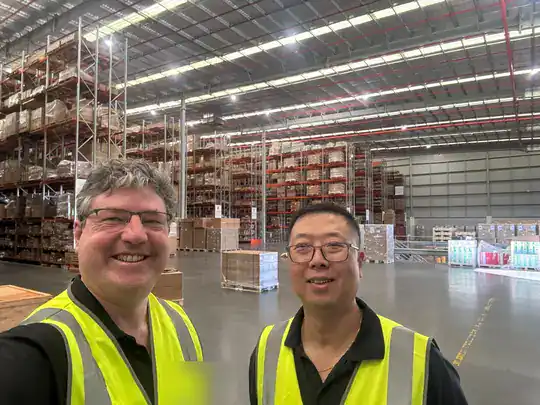
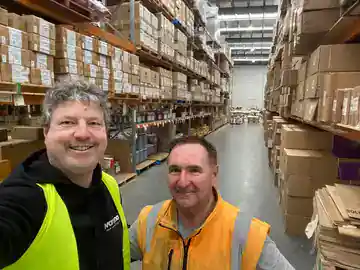
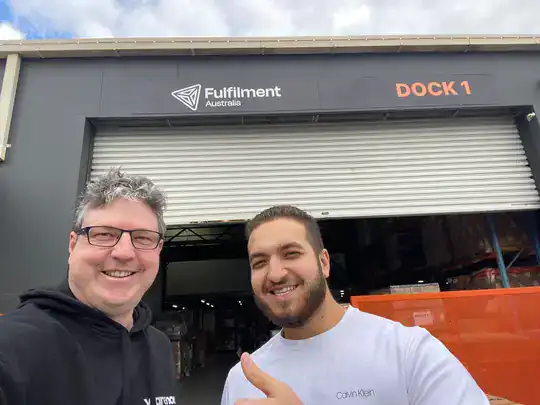
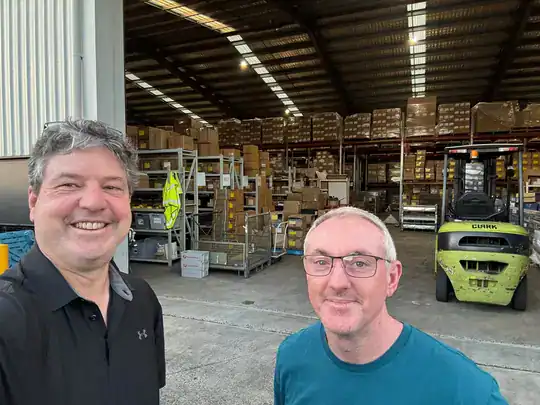
Every Australian 3PL partner visited in person, and every management team met.
We check real performance
Strong management, a gold-standard WMS, reliability and the right certifications.
We compare quotes line by line
A competitive pitch process plus market-rate checks, so you get the best rates.
We're with you until you’re sorted
Personal service: you’re not just a sales lead. We’ll support you throughout the process.
Swipe to compare →
 | Many 3PL matchmakers | Doing it yourself | |
|---|---|---|---|
| Cost | Yes: Free for your business | Partly: Usually free | No: Costs a lot of your time |
| Warehouse expertise | Yes: Deep expertise: we’ve set up and worked in 3PL warehouses | No: Lead-generation experts, not warehousing experts | Partly: Varies |
| Level of support | Yes: Hands-on support until you have the right solution | No: Pass your details on to 3PLs | No: You’re on your own |
| Pre-screening of warehouses | Yes: Visited in person and management met | Partly: Rarely | No: Google searches and reviews, hit and miss |
| Answering 3PL queries | Yes: Coordinated by us to save you time | No: Your responsibility | No: Your responsibility |
| 3PL vs own warehouse analysis | Yes: Included | No: Not offered | No: Not offered |
| Risk of a poor solution | Low | Medium–high | High |
In person, not just online
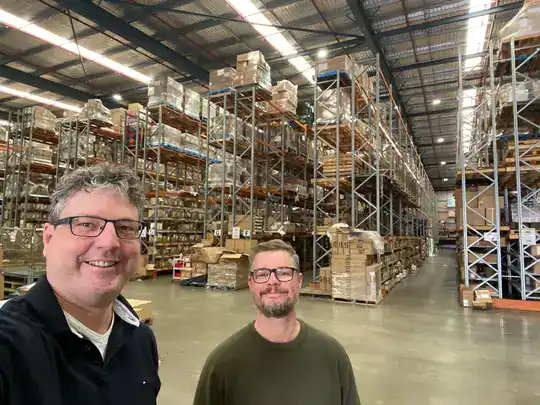
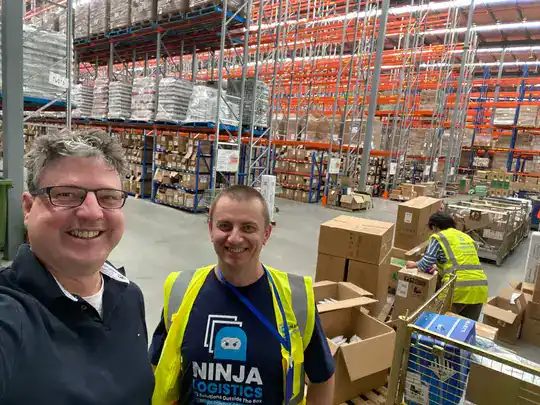
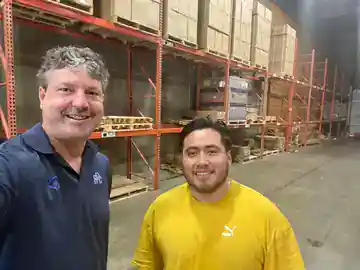
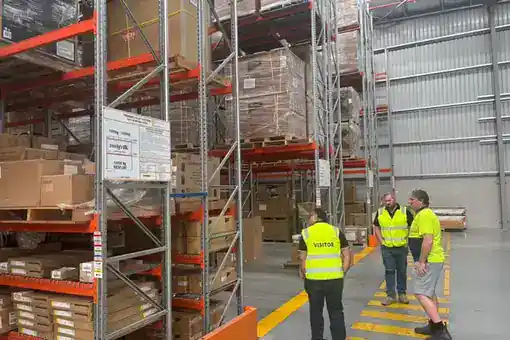
We’ve stood on the warehouse floor
We’ve visited every 3PL partner we work with in Australia and met the management team at every one. Here are a few of those visits.
Real people behind every match
You won’t be matched to a name on a spreadsheet. We know the people running the floor, how they handle peak season and who picks up the phone when something goes wrong.
Planning your Australian network
Where to hold stock in Australia
Delivery times and freight costs depend on where your stock sits and where your customers are. Here’s how the main options compare.
| Where your stock is | Fastest to reach | Slowest and dearest to reach |
|---|---|---|
| Melbourne or Sydney | Fastest NSW, VIC, ACT and south-east QLD | Slowest WA, NT and remote areas |
| Brisbane | Fastest Queensland and northern NSW | Slowest WA, SA and Tasmania |
| Perth | Fastest Western Australia | Slowest the east coast, where most customers are |
| East coast and Perth (two warehouses) | Fastest most of the country | Slower NT, north Queensland and remote areas |
Australia Post Parcel Post typically takes 2–4 business days within a state and 3–6 between states, and remote areas take longer (Australia Post). Couriers are often faster between east coast cities.
One warehouse or two?
Australia is nearly as wide as the continental US, but most of its people live in the south-east. One warehouse in Melbourne or Sydney puts most customers within a few days, while Perth is about 3,300 km away and parcels there cost more and take longer, especially heavy or bulky ones.
Start with one east coast warehouse if you’re new to Australia or your volume is modest. Melbourne is usually cheaper for storage than Sydney; Sydney is the largest market; Brisbane suits Queensland-heavy brands.
Add Perth when Western Australian orders justify it. WA is about 11% of the population, so if your WA share is well above that, or your products are heavy, a second site can pay for itself.
Unlike the US, Australia has one national GST, so a second warehouse doesn’t add tax registrations. It does mean two lots of stock and, often, two monthly minimums.
Typical rates
What a 3PL warehouse costs in Australia
Most Australian 3PLs charge for the same core services. These are typical rates and what pushes them up or down.
| Charge | Typical range (AUD) | What drives it |
|---|---|---|
| Receiving | $15–$35 per pallet | Floor-loaded containers take longer to unload, so cost more per pallet or are charged by the hour |
| Storage | $4–$8 per pallet per week (about $17–$35 a month) | Most Australian 3PLs charge weekly. Sydney is usually the most expensive; Melbourne, Brisbane and Adelaide are often cheaper |
| Pick and pack (first item) | $2–$5 per order | Order volume and how complex each order is |
| Each additional item | $0.30–$1.00 | Depends on how many items your typical order has |
| Account management | $150–$500 per month, if charged | Some 3PLs build it into their other rates |
| Monthly minimum | $300–$3,000 per month, where charged | Matters most for smaller or seasonal brands |
| Setup and integration | Often free for standard Shopify or WooCommerce connections | Custom integrations can cost $5,000 or more |
| Delivery | Charged separately | Size, weight and destination; Perth, the NT and regional areas cost the most from the east coast |
Typical ranges in Australian dollars, compiled from 2026 pricing guides published by Australian 3PLs: Flow 3PL, CSG 3PL, NP Fulfilment and Cryologix. Most 3PLs quote excluding GST. We gather competing quotes so you can compare them line by line. See the hidden costs of using a 3PL or estimate yours with our 3PL cost calculator.
Before you start
What to consider when using a 3PL in Australia
Six things to check before you move stock into an Australian warehouse, whether you’re based here or selling in from overseas.
GST: one national tax
Australia has a single 10% GST, so there’s no state sales tax to track and a second warehouse doesn’t add registrations. Overseas businesses must register once their sales connected with Australia reach A$75,000 in 12 months, and the ATO says stock warehoused in Australia and sold online creates a GST obligation because the goods are located here. Registered importers can usually claim back the GST paid at the border.
Source: Australian Taxation Office
Importing and customs
Consignments worth more than A$1,000 need a full import declaration, and duty, GST and other charges must be paid before the goods are released. Most imports attract 10% GST, plus customs duty on some goods, which free trade agreements can reduce or remove. The Australian Border Force recommends first-time importers use a licensed customs broker.
Source: Australian Border Force · business.gov.au
Biosecurity
Australia has some of the world’s strictest biosecurity rules. Timber pallets and packaging must be treated and marked to the ISPM 15 standard or they can be held for inspection. From September to April each year, extra measures apply to certain goods shipped from brown marmorated stink bug risk countries, including the US and much of Europe.
Source: Department of Agriculture, Fisheries and Forestry · Freight & Trade Alliance
Product rules
Therapeutic goods, including many vitamins and supplements, must be on the Australian Register of Therapeutic Goods before they’re sold. Toys, electrical goods, products with button batteries and many others must meet mandatory safety standards enforced by the ACCC, and you must follow the Australian Consumer Law on refunds and returns.
Source: TGA · Product Safety Australia
Packaging obligations
Businesses with turnover above A$5 million that sell packaged products are covered by the Australian Packaging Covenant, so they need to join APCO or meet their state’s packaging rules instead. In September 2026, the federal government said mandatory national packaging standards would not go ahead this term.
Source: APCO · Down To Earth
Peak season and marketplaces
Click Frenzy and Black Friday in November, Christmas, and end of financial year sales in June are the busiest periods, so agree receiving times and peak capacity upfront. If you sell on Amazon Australia, eBay or Kogan, check the 3PL handles each marketplace’s labelling, prep and delivery rules.
Last reviewed October 2026. This is general information, not legal or tax advice. Selling in from overseas? Read our guide to selling in Australia from overseas.
Want help weighing all this up? We factor location, freight costs and compliance into every shortlist, free.
Get matched free →Australian 3PL warehouses: frequently asked questions
Australian 3PL warehouses
A 3PL (third-party logistics) warehouse stores your inventory, picks and packs orders and ships them to your customers on your behalf. You pay for the space and services you use, without leasing a building, hiring staff or negotiating carrier rates yourself.
Most brands start on the east coast, where about three in four Australians live. Melbourne has Australia’s largest container port and is usually cheaper for storage than Sydney, Sydney is the largest consumer market, and Brisbane suits brands selling mainly into Queensland. Perth makes sense once Western Australian sales justify a second site.
Most brands start with one east coast warehouse. A second in Perth can cut delivery times and freight costs for Western Australian customers, about 11% of the population, once those orders justify it. Because GST is national, a second warehouse doesn’t add tax registrations, but it does mean two lots of stock and often two monthly minimums.
We have pre-screened 3PL partners in Melbourne, Sydney, Brisbane, Adelaide and Perth. If you need somewhere else, such as Canberra, Hobart or a regional centre, we’ll run a bespoke search.
Costs and compliance
Typical ranges are $4–$8 per pallet per week for storage, $15–$35 per pallet to receive stock and $2–$5 per order to pick and pack, plus delivery. Some 3PLs also charge for account management or set a monthly minimum. Rates depend heavily on your products, volume and location, so treat these as a guide, not a quote.
Usually, once sales connected with Australia reach A$75,000 in 12 months. The ATO says goods warehoused in Australia and sold online create a GST obligation because the goods are located here. Speak to a tax adviser before moving stock.
Yes. Many of the brands we help are based overseas, including in New Zealand. You’ll need to clear imports through customs, usually with a licensed customs broker, and meet Australia’s biosecurity rules for timber pallets and packaging.
We generally find a 3PL becomes cost-effective at more than about 100 orders a month, though it depends on whether you ship bulk B2B orders or individual eCommerce orders. If you’re unsure, we can help you compare a 3PL with running your own warehouse.
Using Warenous
Yes. There’s no cost to use Warenous to find a 3PL anywhere in Australia. We’re paid by our warehouse partners, with no incentive to recommend one over another, and our job is to find the best fit for your business.
Yes. Our Australian partners integrate with major eCommerce platforms such as Shopify and WooCommerce, and marketplaces including Amazon Australia, eBay and Kogan. You’ll get an online portal with real-time visibility of orders and stock.
Yes. We’ve personally visited every 3PL partner we work with in Australia, and we’ve met the management team at every one. Our recommendations are based on what we’ve seen on the warehouse floor, not just a sales pitch.
Guides for storing and selling in Australia
Practical guides on 3PL costs, choosing a warehouse and fulfilment for your industry.


Ready to find your Australian 3PL?
No fees, no obligation. A reply within 24 hours.
Important information
The information on this page, including costs, rates, tax, customs, biosecurity and other regulatory details, was accurate to the best of our knowledge at the time of writing (last reviewed October 2026). Prices, laws and regulations change often and depend on your circumstances, so some details may now be out of date.
This page is general information only. It is not financial, tax, accounting, legal or other professional advice, and it should not be relied on when making business decisions. Before acting, get independent advice from a qualified accountant, tax adviser, lawyer or licensed customs broker. To the extent permitted by law, Warenous accepts no liability for any loss arising from reliance on this information.