3PL warehouses across the United States
Find the best 3PL warehouses in the USA.
From the West Coast ports to the Northeast, the Midwest and Florida, our vetted 3PL network covers the US. Tell us what you need and we’ll shortlist reliable warehouses, gather quotes and help you compare them line by line. Free, with no obligation.
- 300+ businesses helped
- Over 90% of our 3PL partners visited in person
- Customised proposals typically within 2–3 days

You’ll deal with me directly, not a call centre. I review every request personally and reply within one business day.
Get matched free (by a human)
Prefer to talk first? Book a free review call
Trusted by 300+ businesses, from startups to global brands


Our US network
3PL warehouse locations across the USA
We have pre-screened 3PL partners in 27 locations across the United States, grouped below by region. Choose a city to explore local insights, or tell us where your customers are and we’ll recommend the right region.
Which region suits you?
1Closest to the Ports of Los Angeles and Long Beach, the main US gateway for goods from Asia. Best for West Coast customers.
Fewer zones to both coasts from one warehouse. Best for customers spread across the country, and Texas suits trade with Mexico.
Close to the Port of New York and New Jersey and the most densely populated part of the US. Best for European imports and East Coast customers.
Not sure? Tell us where your customers are and we’ll recommend a region, or a two-warehouse split.
1West Coast and Mountain West 3PL warehouses
Most sea freight from Asia lands at the Ports of Los Angeles and Long Beach, so West Coast 3PLs can receive containers within days of arrival. They suit brands importing from Asia and selling mainly in the western states.
2Central and Texas 3PL warehouses
A central warehouse keeps most US customers within the middle carrier zones, so a single site can serve both coasts. Houston adds a Gulf Coast port, and Dallas sits on the main trade route to Mexico.
3East Coast 3PL warehouses
East Coast 3PLs are close to the Port of New York and New Jersey, the busiest container port on the East Coast, and to the dense Northeast population. Southeast sites are growing fast and suit brands selling into the South and Florida.
Northeast and Mid-Atlantic
Southeast
3 easy steps to a reliable 3PL warehouse
1
Tell us what you need
A quick form, then a free 45-minute review call with Andrew, our founder. He learns your products, volumes, locations and systems, so we brief only the right warehouses.
2
Compare quotes with an expert
We relay proposals unchanged and go through them with you line by line, so nothing hides in the fine print. Warehouse tours arranged if you want them.
3
Choose with confidence
You sign only with the 3PL you choose. We stay on hand through onboarding and beyond, a call or email away.
Recent US placements
Helping brands find the right US 3PL
A fishing tackle brand placed with a Florida 3PL
We matched a fishing tackle brand with a vetted 3PL in Florida, suited to their products and their growth across the US.
An overseas bedding brand launching in the US
A bedding and manchester brand from outside the US needed a US base for its ecommerce orders. We shortlisted vetted Los Angeles 3PLs and helped the team choose the right fit.
3PL warehouses in Los Angeles →Why businesses choose Warenous
Our founder ran sales at a national 3PL. Now we use that inside knowledge for you.
Warenous helps businesses of all sizes — from startups to global brands — find reliable 3PL warehouse partners at no cost. Our pre-screened network spans the United States, Australia, Europe and Asia, so you get the right warehouse in the right location. Whether you’re expanding into a new market or improving your existing supply chain, our free matching service saves you time, reduces risk and helps your business scale faster.
We’ve visited them
Over 90% of our 3PL partners visited in person, and every management team met.
We check real performance
Strong management, a gold-standard WMS, reliability and the right certifications.
We compare quotes line by line
A competitive pitch process plus market-rate checks, so you get the best rates.
We're with you until you’re sorted
Personal service: you’re not just a sales lead. We’ll support you throughout the process.
Swipe to compare →
 | Many 3PL matchmakers | Doing it yourself | |
|---|---|---|---|
| Cost | Yes: Free for your business | Partly: Usually free | No: Costs a lot of your time |
| Warehouse expertise | Yes: Deep expertise: we’ve set up and worked in 3PL warehouses | No: Lead-generation experts, not warehousing experts | Partly: Varies |
| Level of support | Yes: Hands-on support until you have the right solution | No: Pass your details on to 3PLs | No: You’re on your own |
| Pre-screening of warehouses | Yes: Visited in person and management met | Partly: Rarely | No: Google searches and reviews, hit and miss |
| Answering 3PL queries | Yes: Coordinated by us to save you time | No: Your responsibility | No: Your responsibility |
| 3PL vs own warehouse analysis | Yes: Included | No: Not offered | No: Not offered |
| Risk of a poor solution | Low | Medium–high | High |
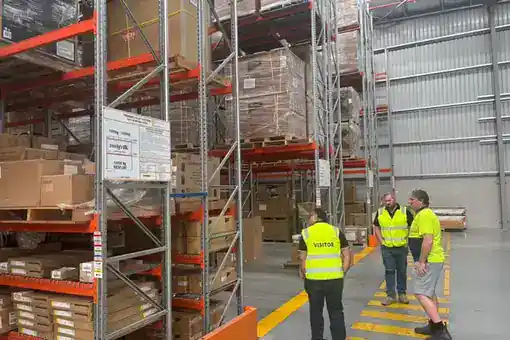
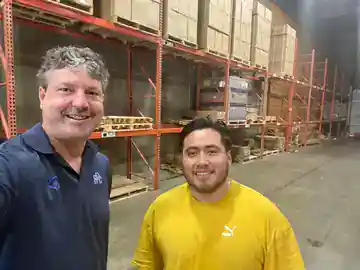
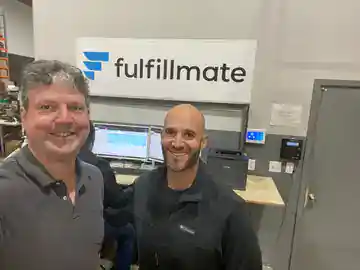
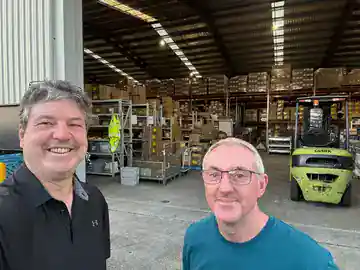
In person, not just online
We’ve stood on the warehouse floor
We’ve visited at least one warehouse belonging to over 90% of the 3PL businesses in our network, and met the management team at every one. Here are a few of those visits.
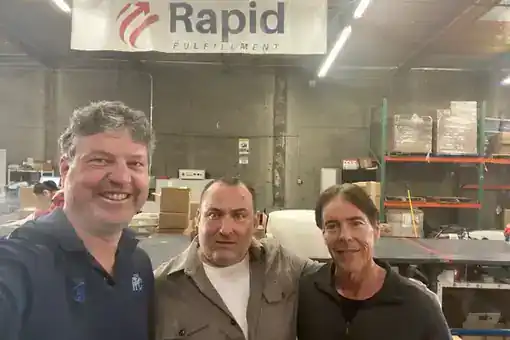
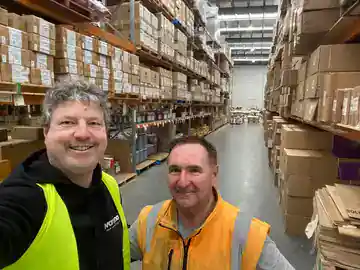
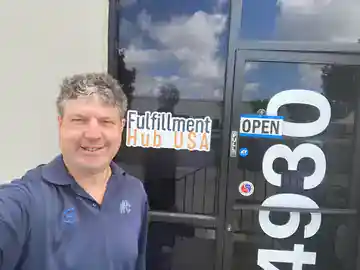
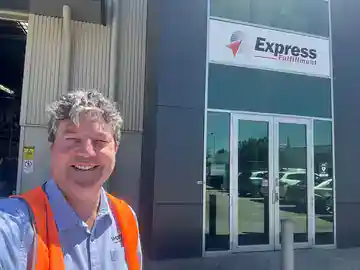
Real people behind every match
You won’t be matched to a name on a spreadsheet. We know the people running the floor, how they handle peak season and who picks up the phone when something goes wrong.
Planning your US network
Where to hold stock in the US
Carrier zones, delivery times and sales tax all depend on where your stock sits. Here’s how the main options compare.
| Where your stock is | Nearest customers | Furthest customers |
|---|---|---|
| West only (e.g. Los Angeles) | Zone 2–4 West Coast | Zone 8 East Coast |
| Central only (e.g. Kansas City, Dallas) | Zone 2–4 Midwest and South | Zone 6 both coasts |
| East only (e.g. New Jersey) | Zone 2–4 Northeast | Zone 8 West Coast |
| West and East (two warehouses) | Zone 2–4 both coasts | Zone 5–6 Texas and the Mountain states |
Carrier zones run from 1–2 (up to about 150 miles) to 8 (over about 1,800 miles). Approximate; carriers set zones by origin and destination ZIP code.
One warehouse or two?
The US is about 2,800 miles wide, so from a single coastal warehouse your customers on the other coast are in Zone 8, the most expensive band, with ground delivery often taking four to five business days. Parcel prices rise with both zone and billable weight, so the gap is widest for heavy or bulky products.
Start with one warehouse if you’re new to the US, your volume is modest, or most customers are in one region. Put it where most of your customers are, or in the middle of the country if they’re spread out.
Consider two warehouses once you have steady volume on both coasts. Splitting stock brings most orders into lower zones and faster delivery, but it means two monthly minimums, two lots of inventory to manage and, usually, sales tax registration in two states.
We can look at where your customers are and model both options before you commit.
Typical rates
What a 3PL warehouse costs in the USA
Most US 3PLs charge for the same core services. These are typical rates and what pushes them up or down.
| Charge | US average | Typical range | What drives it |
|---|---|---|---|
| Receiving | About $10.50 per pallet | $5–$15 per pallet; container unloads often $250–$600 | Floor-loaded containers take longer, so cost more than pallets |
| Storage | About $20 per pallet per month | $10–$30 per pallet per month | Port markets such as Los Angeles and New Jersey usually cost more than inland, Central and Southeast sites |
| Pick and pack (first item) | About $3.25 per order | Roughly $2–$5 per order | High-volume brands can negotiate well below this |
| Each additional item | Varies by 3PL | $0.30–$1.00 | Depends on how many items your typical order has |
| Monthly minimum | About $520 per month | $0–$2,500 per month | Matters most for smaller or seasonal brands |
| Setup fee | About $425 (not all 3PLs charge one) | $250–$1,000+ | Often negotiable |
| Shipping | Charged separately | Varies widely | Weight, size and carrier zone; usually the biggest cost |
US averages for receiving, storage, pick and pack and setup are from the Warehousing and Fulfillment 2025 Costs and Pricing Survey, as summarised in Red Stag Fulfillment’s 3PL pricing guide. The monthly minimum and typical ranges are compiled from published 2026 pricing guides. Regional differences are directional. We gather competing quotes so you can compare them line by line. See the hidden costs of using a 3PL or estimate yours with our 3PL cost calculator.
Before you start
What to consider when using a 3PL in the USA
Six things to check before you move stock into a US warehouse, whether you’re based in the US or selling in from overseas.
Sales tax follows your stock
45 states and Washington, D.C. have a statewide sales tax; Alaska, Delaware, Montana, New Hampshire and Oregon don’t, although some Alaskan towns do. Holding inventory in a state’s warehouse generally creates a physical presence there, so you’ll usually need to register and collect sales tax in that state whatever your sales. Without stock in a state, most use an economic threshold, commonly $100,000 of sales a year. Splitting stock across two 3PLs can mean two registrations.
No more duty-free small parcels
The $800 duty-free “de minimis” allowance for low-value parcels has been suspended for imports from every country since 29 August 2025, and a February 2026 executive order kept the suspension in place. Federal law also repeals it from 1 July 2027. For overseas brands, shipping stock in bulk to a US 3PL and clearing it through customs once is usually cheaper than sending parcels one by one.
Source: Sandler, Travis & Rosenberg · Crowell & Moring trade law blog
Importer of record and customs
Every commercial import needs an importer of record, who is responsible for the entry and the duties. Overseas businesses can act as their own importer of record with a customs bond, usually through a licensed customs broker. Agree with your freight forwarder and 3PL who handles customs, delivery from the port and receiving before your first container ships.
Product rules
Some products need extra steps before they can be sold. Food and supplements need FDA facility registration and prior notice of each shipment, cosmetics have FDA listing rules, and children’s products need testing and a Children’s Product Certificate under CPSC rules. States add their own, such as California’s Prop 65 warnings and packaging law (see our Los Angeles page).
Source: FDA import program · CPSC
Port or inland?
Warehouses next to a port receive containers fastest, but space usually costs more. Inland hubs such as the Inland Empire, Dallas, the Lehigh Valley or Kansas City are often cheaper and closer to more customers, with containers arriving by truck or rail. The right answer depends on whether speed from the port or cost per order matters more to you.
Marketplaces and peak season
If you sell on Amazon, Walmart or TikTok Shop, check that the 3PL handles each marketplace’s prep, labelling and delivery rules, and how late its same-day cut-off is. Inbound volumes peak from late summer ahead of the holiday season, so agree receiving times and peak capacity upfront.
Last reviewed October 2026. This is general information, not legal or tax advice. Selling in from overseas? Our Export Starter partners can help with US sales tax, customs and compliance.
Want help weighing all this up? We factor location, carrier zones and compliance into every shortlist, free.
Get matched free →USA 3PL warehouses: frequently asked questions
US 3PL warehouses
A 3PL (third-party logistics) warehouse stores your inventory, picks and packs orders and ships them to your customers on your behalf. You pay for the space and services you use, without leasing a building, hiring staff or negotiating carrier rates yourself.
It depends on where your customers are and where your stock arrives. West Coast cities such as Los Angeles suit Asian imports and western customers, East Coast sites such as New Jersey suit European imports and the Northeast, and central hubs such as Kansas City or Dallas reach both coasts in fewer carrier zones from one warehouse.
Most brands start with one. A second warehouse on the other coast makes sense once you have steady volume on both coasts, because it brings most orders into lower carrier zones and faster delivery. The trade-offs are two monthly minimums, split inventory and, usually, sales tax registration in a second state.
We have pre-screened 3PL partners in 27 locations across the West, Central and East regions of the US. If we don’t have a partner where you need one, we’ll run a bespoke search to find one.
Costs and compliance
US averages are about $10.50 per pallet to receive stock, about $20 per pallet per month to store it ($10–$30 is typical), and about $3.25 per order to pick and pack, plus shipping. Many 3PLs also have a monthly minimum, averaging about $520. Rates depend heavily on your products, volume and location, so treat these as a guide, not a quote.
Usually, yes. Holding inventory in a state’s warehouse generally creates a physical presence, so you’ll normally need to register and collect sales tax in that state, unless it is one of the five states without a statewide sales tax. Speak to a tax adviser before moving stock.
Yes. Many of the brands we help are based outside the US. You’ll need an importer of record and usually a customs broker, and since the duty-free de minimis allowance was suspended in 2025, shipping stock in bulk to a US 3PL is usually the most cost-effective route.
We generally find a 3PL becomes cost-effective at more than about 100 orders a month, though it depends on whether you ship bulk B2B orders or individual eCommerce orders. If you’re unsure, we can help you compare a 3PL with running your own warehouse.
Using Warenous
Yes. There’s no cost to use Warenous to find a 3PL anywhere in the US. We’re paid by our warehouse partners, with no incentive to recommend one over another, and our job is to find the best fit for your business.
Yes. Our US partners integrate with major eCommerce platforms such as Shopify and WooCommerce, and marketplaces including Amazon, Walmart, TikTok Shop and eBay. You’ll get an online portal with real-time visibility of orders and stock.
Yes. We’ve personally visited at least one warehouse belonging to over 90% of the 3PL businesses in our network, and we’ve met the management team at every one. Our recommendations are based on what we’ve seen on the warehouse floor, not just a sales pitch.
Guides for storing and selling in the US
Practical guides on 3PL costs, choosing a warehouse and fulfilment for your industry.



Ready to find your US 3PL?
No fees, no obligation. A reply within 24 hours.
Important information
The information on this page, including costs, rates, tax, customs, biosecurity and other regulatory details, was accurate to the best of our knowledge at the time of writing (last reviewed October 2026). Prices, laws and regulations change often and depend on your circumstances, so some details may now be out of date.
This page is general information only. It is not financial, tax, accounting, legal or other professional advice, and it should not be relied on when making business decisions. Before acting, get independent advice from a qualified accountant, tax adviser, lawyer or licensed customs broker. To the extent permitted by law, Warenous accepts no liability for any loss arising from reliance on this information.