
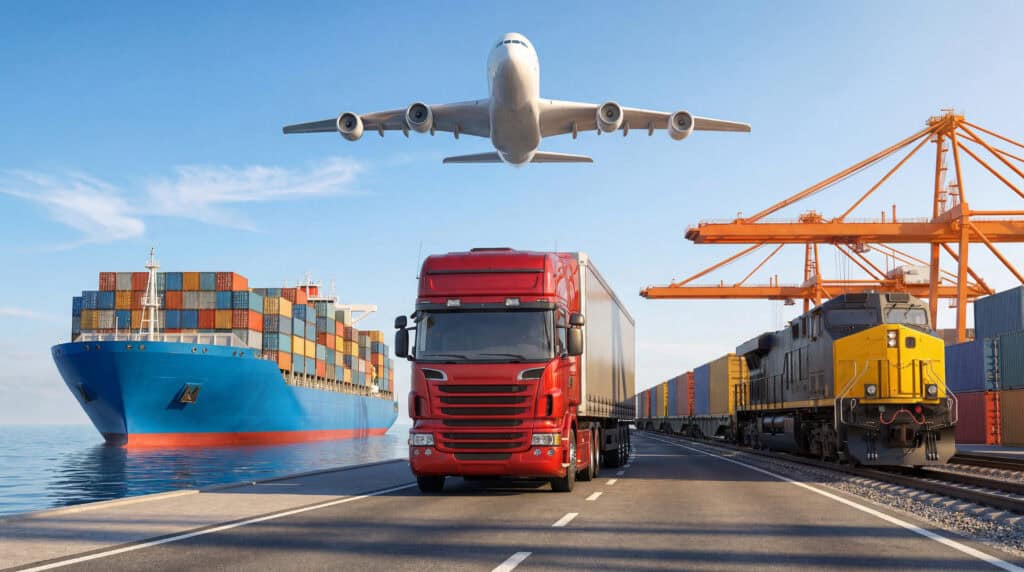
Cross-border fulfillment means getting orders to customers in another country. There are three main models: ship every order from your home warehouse, hold stock with a 3PL inside the target market, or a hybrid of the two. With duty-free thresholds shrinking, holding stock with a local 3PL is now the most reliable cross-border fulfillment model once a market produces steady sales.
Selling overseas is easy to switch on and hard to do profitably. Parcels stuck in customs, surprise duties and slow delivery all cost you customers. This guide explains the cross-border fulfillment models, the duty and tax rules that shape them, and how to choose the right 3PL for each market.
What is cross-border fulfillment?
Cross-border fulfillment covers everything needed to get an order from your stock to a customer in another country: storage, picking and packing, customs clearance, duties and taxes, international or local delivery, and returns. A third-party logistics (3PL) provider can handle some or all of it.
The key decision is where your stock sits when the order is placed: at home, or already inside the customer’s country.
Which cross-border fulfillment model is right for me?
| Model | How it works | Best for | Watch out for |
|---|---|---|---|
| Ship from home | Every order ships internationally from your home warehouse or 3PL | Testing a new market; low volumes; high-value, light products | Slow delivery, customs on every parcel, duties at the door, costly returns |
| Local 3PL in market | You ship stock in bulk to a 3PL in the target country, which fulfils orders domestically | Markets with steady sales | Stock split across countries; you need an importer of record and local tax registration |
| Hybrid | Best sellers held locally, the long tail shipped from home | Large catalogues | More complex inventory planning |
As a starting point, consider local stock once a market produces regular weekly orders and customers are complaining about delivery times or fees. Bulk freight per unit is far cheaper than international parcel rates, and domestic delivery is faster.
When we priced five 3PLs on the same order data for an apparel brand, shipping made up 60–67% of each 3PL’s total cost. Delivery is usually the biggest cost in fulfillment, so cutting the distance to the customer with local stock does more for cross-border fulfillment costs than any storage or handling rate.
How do duties and taxes affect cross-border fulfillment?
Duty and tax rules decide which model is viable. The main ones to know:
- United States: duty-free de minimis entry for goods under US$800 has been suspended for all countries since 29 August 2025, so every parcel now pays duty. New importer of record rules will also make it harder for overseas companies to import themselves.
- Canada: courier shipments from the US or Mexico are duty-free up to CAD 150 and tax-free up to CAD 40. From other countries, relief stops at CAD 20.
- United Kingdom: VAT on consignments up to £135 is collected by the seller or marketplace at the point of sale.
- European Union: VAT on consignments up to €150 can be collected at checkout through the Import One-Stop Shop (IOSS).
- Australia: GST applies to low-value imported goods (A$1,000 or less), collected by registered overseas sellers and marketplaces.
Two choices matter most:
- Who pays duties. Delivered Duty Paid (DDP) means you collect and pay duties and taxes so the customer pays nothing at the door. Delivered At Place (DAP) leaves duties to the customer, which leads to refused parcels and complaints. DDP is almost always the better customer experience.
- Who is the importer of record. If you hold stock in a market, someone must import it legally. That can be your own company, a local partner or an importer of record service.
Check our guide to freight terminology if Incoterms like DDP and DAP are new to you.
How do I choose a cross-border fulfillment partner?
- Location: close to your customers in that market, and to the port or airport your stock arrives through.
- Import support: experience receiving international freight, and links to customs brokers and importer of record partners.
- Systems: integration with your store and marketplaces, with live stock levels across all your warehouses.
- Local carriers: competitive domestic rates and the carriers local customers trust.
- Returns: local returns processing, so returned stock can be resold in-market rather than shipped home.
- Contract terms: minimums, notice periods and costs to exit if the market does not work out.
Our guide to choosing an international fulfillment partner covers vetting in more detail.
Related: US 3PL warehouses · UK 3PL warehouses · Australian 3PL warehouses · The end of US de minimis · Selling in Australia from overseas · Expanding into Canada from the US
Frequently asked questions
Is cross-border fulfillment cheaper with a local 3PL?
Usually, once volumes are steady. Bulk freight costs much less per unit than international parcels, and domestic delivery rates are lower. You pay for storage in each market, so it suits products that sell regularly.
What is the difference between DDP and DAP?
Under DDP (Delivered Duty Paid) the seller pays duties and taxes, so the customer pays nothing on delivery. Under DAP (Delivered At Place) the customer pays them at the door, which often leads to refused deliveries.
Do I need a company in each country I sell to?
Not always. Many markets let overseas sellers register for sales tax and use a local importer of record service or partner. Rules differ by country, so check each market before you ship stock.
How do I handle returns from overseas customers?
With a local 3PL, returns go back to the in-market warehouse and can be resold there. Shipping individual returns back home is rarely worth it.
Can one 3PL handle cross-border fulfillment in several countries?
Some can, but many brands get better rates and service from a strong local 3PL in each market. Warenous can match you with pre-screened 3PLs in the US, UK, Canada, Australia and New Zealand.
Expanding into a new market?
Warenous matches you with pre-screened 3PLs in your target country and connects you with importer of record partners, for free.
Book a free call with a 3PL expert




