
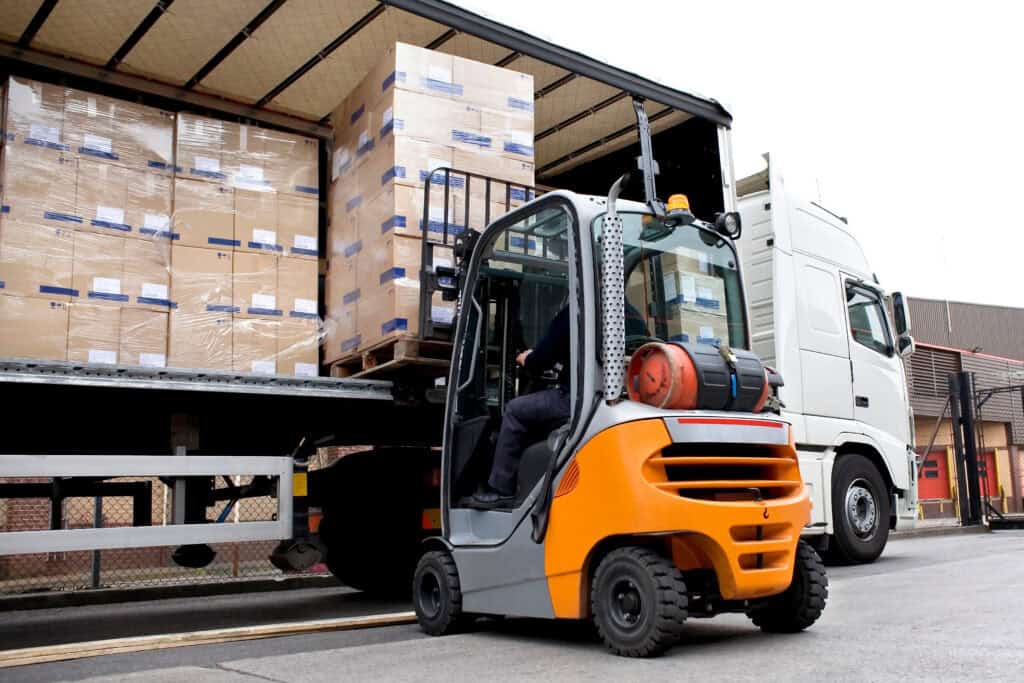
3PL receiving fees cover the warehouse work when your stock arrives: unloading, counting, checking against the paperwork, recording it in the system and putting it away. They are usually charged per pallet, per carton, per container or per hour. The right unit depends on how your stock arrives, and messy or undocumented deliveries almost always cost more.
Receiving looks like a small line on a quote, but a low rate can still produce a large bill if the billing unit does not suit your deliveries. This guide explains what 3PL receiving fees cover, how they are charged and how to keep them under control.
What do 3PL receiving fees cover?
Receiving is the work that happens after your stock reaches the warehouse and before it is available to sell. It usually includes:
- Unloading the truck or container.
- Counting cartons or units against the purchase order or advance shipping notice (ASN).
- Checking for visible damage and recording any discrepancies.
- Entering the stock into the warehouse management system.
- Putting it away into its storage location.
It does not include the freight to get the stock to the warehouse, storage once it is there, or picking and packing orders later. Labelling, sorting mixed cartons or repacking are often charged separately, so check your contract’s definitions.
How are 3PL receiving fees charged?
| Billing unit | Suits | Watch out for |
|---|---|---|
| Per pallet | Regular palletised deliveries with one or few SKUs per pallet | Extra charges for mixed-SKU or oversized pallets |
| Per carton | Loose cartons and smaller deliveries | Costs climb fast on large loose-loaded deliveries |
| Per container | Imports arriving in 20ft or 40ft containers | Rates differ for loose-loaded versus palletised containers |
| Per hour | Irregular or complex deliveries | Hard to predict; ask how time is recorded |
| Per unit or SKU | Deliveries that need item-level counting or scanning | Expensive for high-unit deliveries |
No unit is automatically cheaper. Price your typical delivery under each unit to see which works for you. Our guide to pallet sizes helps if you are deciding how suppliers should ship.
When we compare 3PL quotes, receiving is rarely what separates the cheapest option from the most expensive; shipping usually is. But receiving is where poor supplier paperwork shows up as extra hours. Brands that send ASNs and consistent carton labels tend to see fewer surprise charges and get stock on sale faster.
What makes 3PL receiving fees go up?
- Loose-loaded containers. Cartons stacked by hand take far longer to unload than pallets.
- Mixed-SKU cartons or pallets. Staff have to sort before they can count.
- Missing or wrong paperwork. No ASN, or quantities that do not match, means investigation time.
- Unlabelled or poorly labelled stock. Barcoding or relabelling is usually extra.
- Damaged goods. Inspecting, photographing and separating damaged units adds time.
- Unannounced deliveries. Some 3PLs charge more for deliveries that are not booked in.
How can I keep 3PL receiving fees under control?
- Send an ASN for every delivery. List SKUs, quantities, cartons and pallets before the stock arrives.
- Set supplier packing rules. One SKU per carton, clear barcodes on every carton and agreed pallet heights.
- Book deliveries in advance. Use the 3PL’s booking process to avoid surcharges and delays.
- Palletise where you can. Ask suppliers or forwarders whether palletising before shipping is cheaper than paying for loose unloading.
- Check receiving charges against your records. Match billed pallets, cartons or hours to the delivery, as part of a regular review of your 3PL pricing.
- Agree a dock-to-stock time. Set a target in the contract for how quickly received stock becomes available to sell, commonly 24–72 hours.
Related: Hidden costs of using a 3PL · 3PL warehouse costs explained · 3PL cost calculator
Frequently asked questions
Is a receiving fee the same as inbound freight?
No. Inbound freight pays to transport the stock to the warehouse. The receiving fee pays for the warehouse work once it arrives.
What happens if a delivery arrives without an ASN?
The warehouse has to work out what has arrived before it can count it, which takes longer. Many 3PLs charge extra or receive it more slowly. Check your contract for the exact terms.
Are returns charged as receiving?
Usually not. Returns are normally a separate charge per unit or per return, because each one needs inspecting and a decision on whether it can be resold.
Can I negotiate receiving fees?
Yes, especially if your deliveries are well prepared. Clean, palletised, single-SKU deliveries with ASNs are cheaper to handle, and that is a fair basis for a lower rate.
How do I estimate receiving costs before choosing a 3PL?
Describe your typical month: how many deliveries, in what format, how many SKUs and any special handling. Ask each 3PL to price that same scenario so the quotes can be compared.
Want quotes priced on how your stock actually arrives?
Warenous gets quotes from pre-screened 3PLs based on your real inbound and order profile, and compares the total cost for you, for free.
Book a free call with a 3PL expert




