
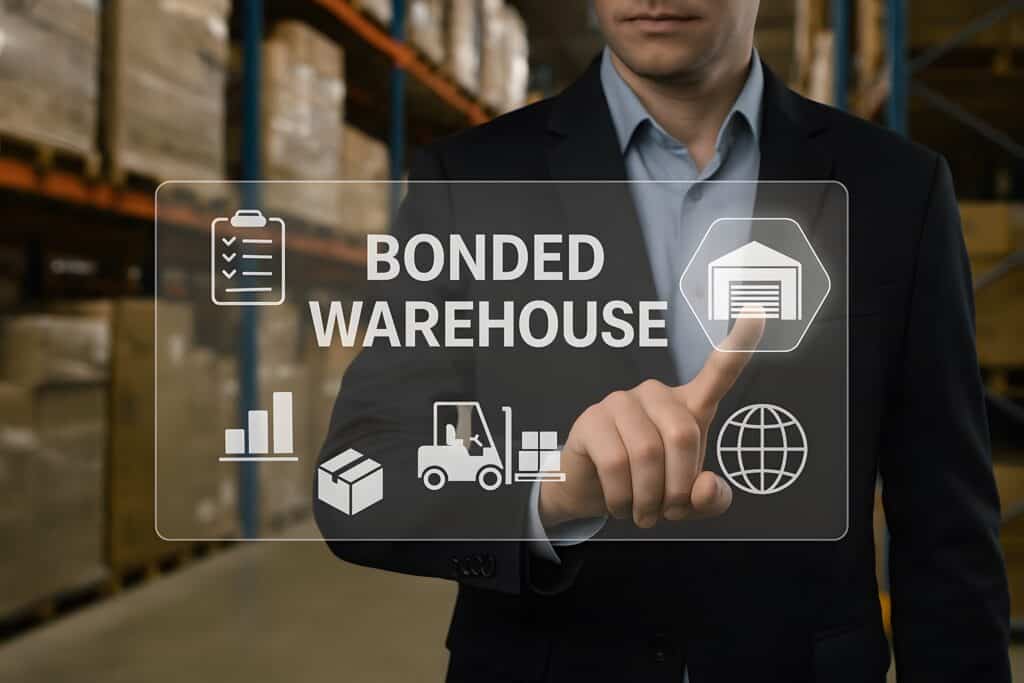
A bonded warehouse is a customs-approved facility where imported goods can be stored without paying duty or import taxes until they are released into the local market. If the goods are re-exported instead, duty is often never paid. Using one improves cash flow and suits importers holding stock for a long time or shipping it on to other countries.
When goods arrive in a country, duty and import taxes are normally paid straight away, before a single unit is sold. Bonded storage delays that payment. This guide explains how bonded storage works, when it makes sense, how it differs from a free trade zone and how to find one.
General information, not customs advice. Rules differ by country.
What is a bonded warehouse?
A bonded warehouse is a secure building, approved and supervised by customs, where dutiable imports can be held without duty being paid. The operator provides a customs bond, a financial guarantee that duties will be paid if goods go missing or rules are broken. In Australia these are called licensed warehouses; in the UK and EU, customs warehouses.
Duty and import taxes become payable only when goods leave the facility for the local market. Goods that are re-exported, or in some cases destroyed under customs supervision, can leave without duty.
There are two main types:
- Public bonded warehouses are run by 3PLs and store goods for many importers. This is the usual option for growing brands.
- Private bonded warehouses are operated by a single company for its own goods. They suit large importers with steady volumes.
What are the benefits of a bonded warehouse?
- Better cash flow: pay duty and taxes when you sell, not when stock lands.
- No duty on re-exports: goods shipped on to another country from bonded storage generally avoid duty in the storage country.
- Flexibility on tariffs: you can hold stock while trade rules or tariff rates change, then decide where to sell it.
- Break bulk: receive a full container and release only what you need, when you need it.
- Light processing: many facilities allow cleaning, sorting, repacking or relabelling under customs supervision.
The trade-offs are higher storage and handling rates, strict record-keeping and customs audits, and less flexibility on what you can do with the goods.
A bonded warehouse makes the most sense for slow-moving or high-duty stock, or stock that may be shipped on to another country. For fast-moving ecommerce stock that sells within weeks, the duty saving is often smaller than the extra cost of bonded storage, so run the numbers on your own product mix before switching.
How long can goods stay in a bonded warehouse?
| Country | Name | Typical storage limit |
|---|---|---|
| United States | Bonded warehouse (classes 1 to 11) | Up to five years from the date of import |
| Canada | Customs bonded warehouse | Generally up to four years |
| United Kingdom | Customs warehouse | No fixed time limit |
| European Union | Customs warehouse | No fixed time limit in most cases |
In the US, manufacturing in bond needs a specific class of facility (Class 6), and most bonded warehouses only allow light processing. Check the details with US Customs and Border Protection or your local customs authority.
How is a bonded warehouse different from a free trade zone?
A free trade zone (called a foreign-trade zone in the US) is an area treated as outside the customs territory, often allowing manufacturing and indefinite storage. A bonded facility is a single approved site with storage limits and tighter rules on processing. Both defer duty, but bonded warehouses are more widely available to importers and 3PL customers.
Is a bonded warehouse right for my business?
A bonded warehouse is worth considering if you:
- Import goods with high duty rates, such as alcohol, tobacco or some apparel and footwear.
- Hold stock for months before selling it.
- Re-export part of your stock to other countries.
- Want to wait for tariff changes before releasing goods.
- Need to break large shipments into smaller releases to protect cash flow.
When choosing a facility, check its customs approval and track record, location near your port of entry, systems that track duty status by item, security, and how quickly it can release goods to your fulfillment operation. Many importers use bonded storage for bulk stock and a separate 3PL for day-to-day fulfillment. Learn more in our guide to cross-border fulfillment.
Related: New US importer of record rules · Freight terminology explained · Global pallet sizes
Frequently asked questions
Who pays the duty on goods in a bonded warehouse?
The importer of record pays duty and import taxes when goods are released into the local market. If goods are re-exported, duty is generally not payable in the storage country.
Is a bonded warehouse more expensive than a normal warehouse?
Usually, yes. Storage and handling rates are higher because of customs supervision, security and record-keeping. The cash flow and duty savings need to outweigh the extra cost.
Can I sell online directly from bonded storage?
It is possible but complex, because each release into the local market needs a customs entry and duty payment. Most brands release stock in batches to a fulfillment 3PL instead.
What happens if goods are lost or stolen from a bonded warehouse?
Duty usually becomes payable, backed by the operator’s customs bond. Check how the operator’s insurance and liability cover this before you store goods.
Can a 3PL offer bonded storage?
Yes. Many 3PLs hold bonded or licensed warehouse approvals. Warenous can help you find one with the approvals and location you need.
Need bonded storage?
Warenous matches importers with pre-screened 3PLs that offer bonded or licensed warehousing, and compares their quotes for you, for free.
Book a free call with a 3PL expert




